

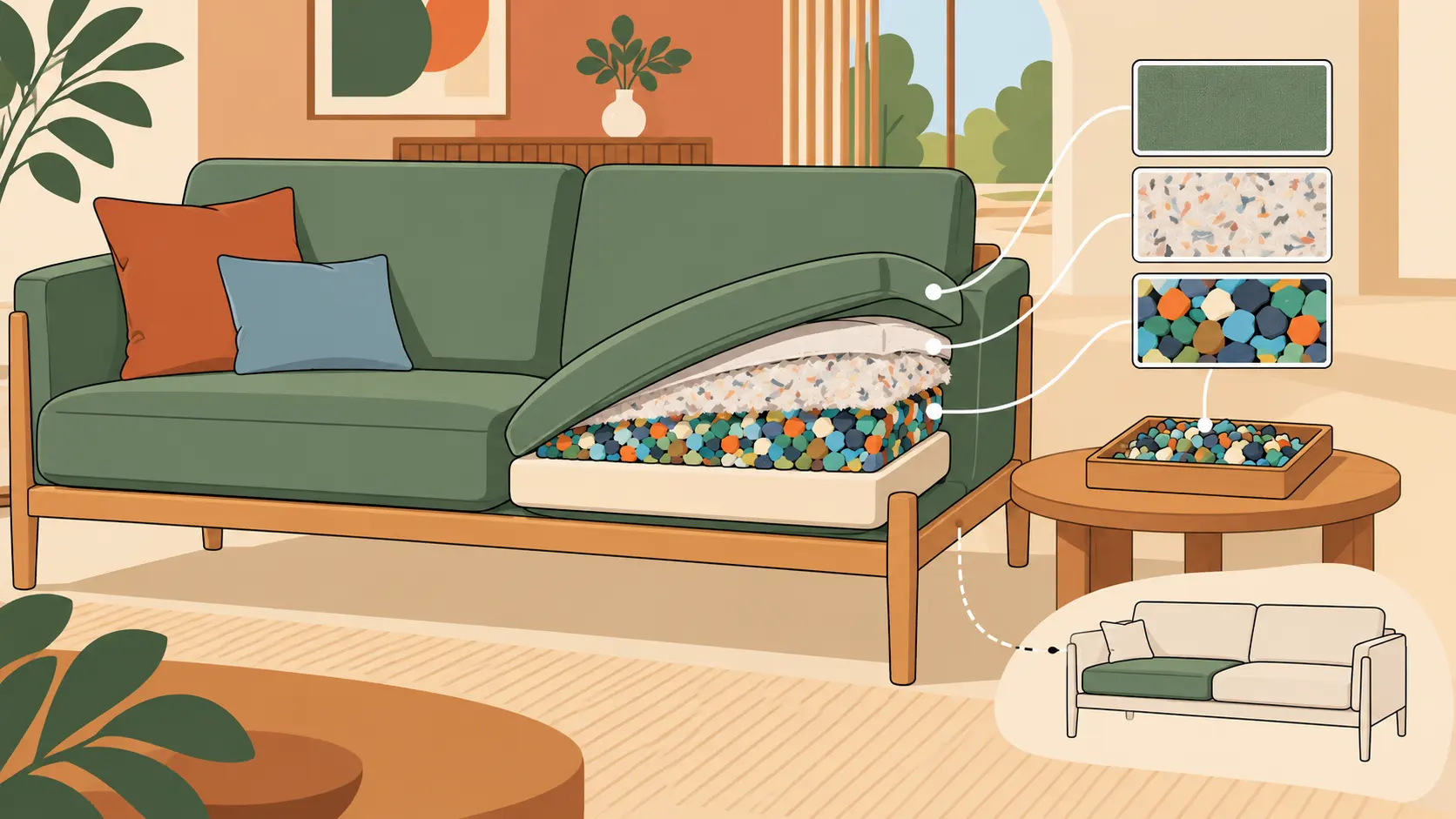
Recycled content in furniture needs a precise scope. A statement about cushion filling does not describe the frame, upholstery or complete sofa. When a dealer passes material information to a client, that distinction should remain visible in the product record and in the documents accompanying the delivered item.
An earlier manufacturer release describes foam from unused shoes in seat cushions. October coverage revisits that application.
For procurement, specification and service teams, the useful question is not simply whether a material has a recovery story. It is whether the claim can be linked to the component, configuration and evidence that the customer actually receives. The workflow below is our practical recommendation, not a certification method.
Define recycled content in furniture at component level
Start by identifying the part: seat filling, cover, panel or another named component. Keep material origin separate from the claim about its content. Record whether the source describes unused surplus or previously used material; do not replace one description with another.
If a supplier provides a percentage, retain what it refers to and the stated calculation basis. A figure for one filling mixture cannot simply become a figure for the whole chair. Where the reference quantity or method is missing, request clarification rather than estimating it from appearance.
Keep a short evidence record
For each material claim, connect:
- the exact wording and the component it covers;
- the product variant and any relevant batch or supplier reference;
- the issuing organisation, document date and applicable version;
- the declared amount, reference basis and method, where provided;
- the review status and person responsible for unresolved questions.
Distinguish a supplier declaration from an independently checked result. Do not silently label one as the other. Keeping unknowns visible lets the sales team explain what is supported without broadening the claim beyond the available evidence.
Check the claim again when a component changes
Consider a sofa delivered with documented filling that later receives a replacement cushion. Preserve the original delivery record, add the replacement and request the documentation for the new part. Until it is checked, the old declaration should not automatically describe the replacement.
Recycled input also does not establish that the complete furniture item can be recycled at the end of use, or that it has a lower total environmental impact. Those are different questions requiring their own scope and evidence. The point is to make a specific material statement retrievable, not to turn it into a general circularity guarantee.
Connect material evidence to the furniture in use
Our guide to furniture repair data and product versions explains how changes stay associated with the actual asset. Furnify helps connect furniture, locations and service history alongside the relevant product information. It does not measure or certify recycled content.
Trace one material claim with Furnify, from the supplier document to a delivered item and its latest replacement parts. Which links can your team demonstrate, and which still need evidence?