

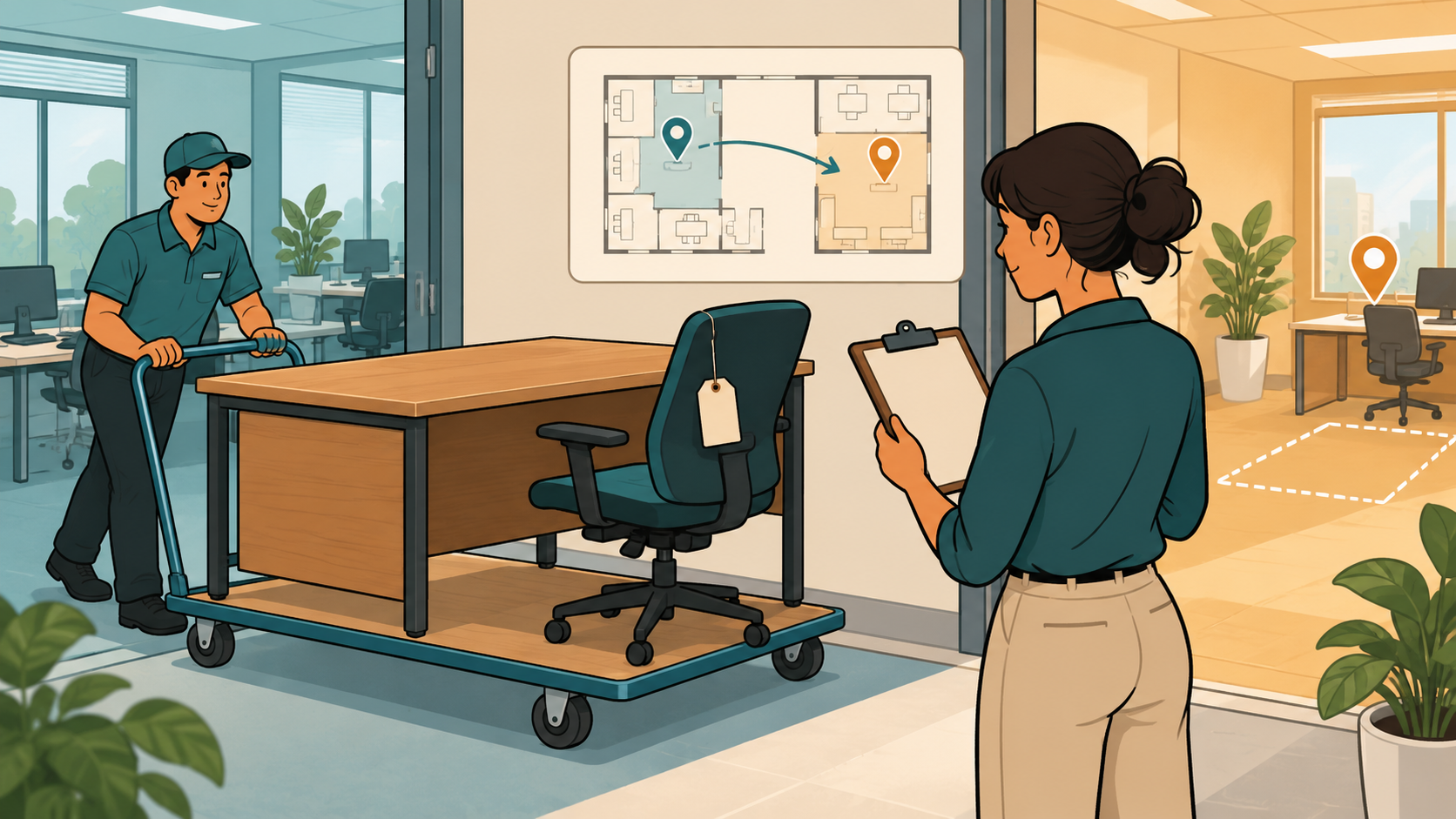
Office furniture relocation can leave the physical workplace ready while the inventory is already out of date. A desk reaches its new room, a chair stays behind for inspection and a cabinet goes into storage. If the move list is treated as the final record, the next service request starts with a search for furniture that is no longer where the system says it is.
PIANOo’s office furniture guidance treats reuse and limiting transport as connected considerations. The process below is our recommendation, not an official checklist.
For facilities teams, furniture dealers and relocation partners, the practical goal is to keep identity, availability and location connected before, during and after the move.
Start office furniture relocation with a checked baseline
Agree what each asset record identifies before issuing move instructions. Retain the existing identifier, current building and room, configuration, condition and relevant service documents. Resolve duplicate identifiers and unknown locations separately; do not make an uncertain record look complete by assigning a convenient room.
A shared quantity is not enough when individual items have different configurations or condition. Confirm which objects are actually available, and who can release them from their current use.
Separate reservation from completed movement
Assign a destination without immediately replacing the current location. A planned move, an item in transit and a received item are different operational states. Use a short movement record with:
- the asset identity and confirmed starting location;
- the planned destination and intended moving window;
- the reservation and responsible coordinator;
- the actual movement status and recorded event time;
- the receiving check and any unresolved exception.
For example, a reserved desk may be reassigned before collection. Update the reservation and communicate the changed instruction, rather than leaving two teams expecting the same item. Limit changes to the people responsible and make the current plan distinguishable from earlier versions.
Record what happened, including exceptions
Imagine an internal move in which a chair remains behind because its adjustment mechanism needs checking. Keep that exception against the chair, not as a note attached only to the transport job. Record the actual location and responsible follow-up. The chair should not appear available at the planned destination.
Where components are separated for transport, preserve their connection to the right furniture item. Identification does not replace competent handling, installation or a technical check where necessary.
Reconcile before closing the move
At receipt, compare the objects on site with the plan. Confirm location and condition, record missing or substituted items, and assign each discrepancy to an owner. Only close the movement when the receiving check supports the current record; keep unresolved cases visible.
Office furniture relocation: keep the inventory accurate verified inventory becomes a starting point for the next repair or reuse decision. Our guide to circular furniture procurement before buying new explains why knowing what is available matters. A move alone proves neither reuse suitability nor a quantified environmental saving.
Furnify helps connect furniture, locations and service history. It supports the operational record alongside the moving and receiving teams; it does not replace their physical checks. Walk through one internal move with Furnify and test whether a colleague can find the item, its latest location and any open service issue after the project closes.