

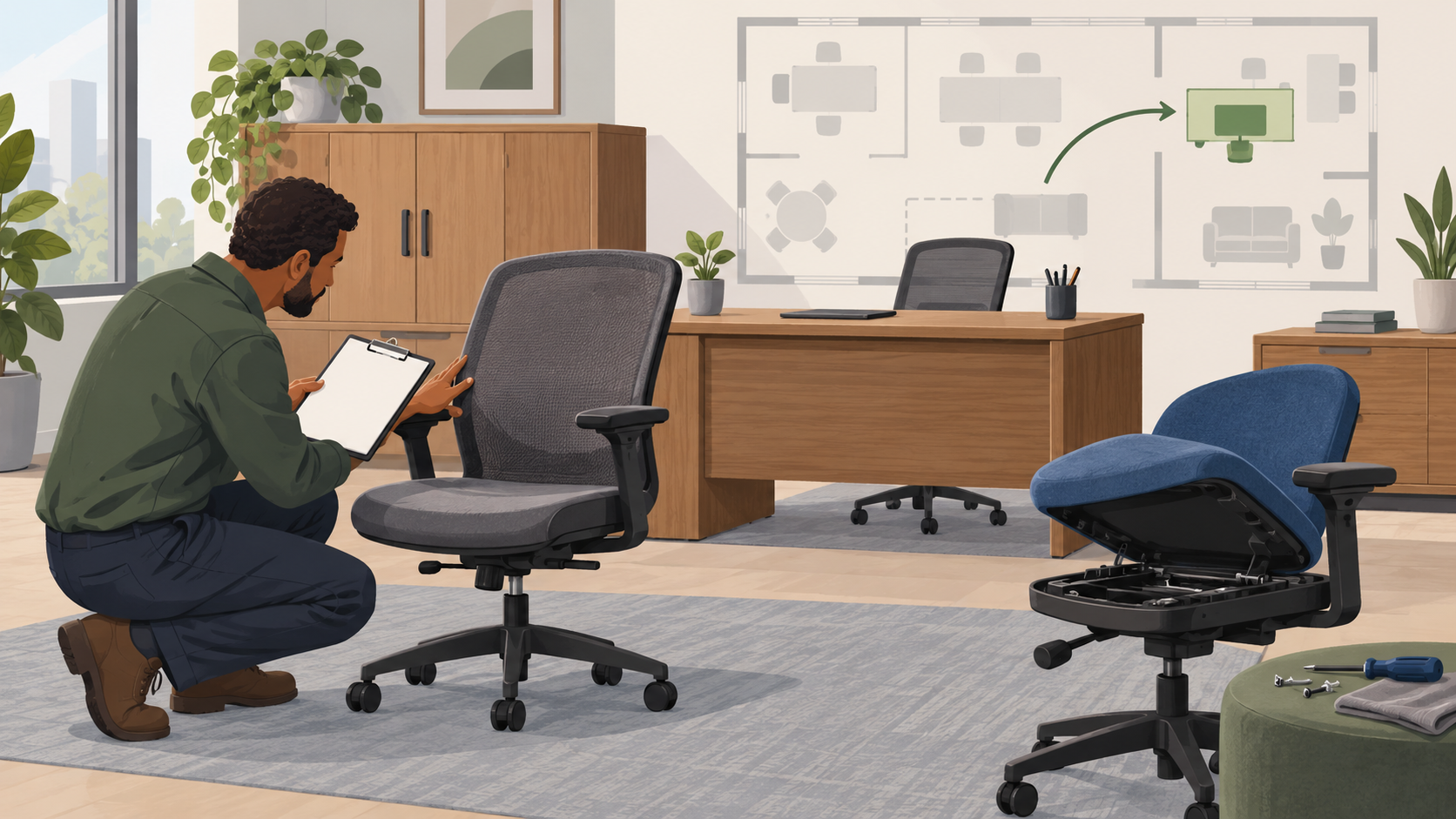
Circular furniture procurement starts before a request for quotations. If a project team does not know which desks and chairs are available, what condition they are in or when they can be moved, reuse cannot become a reliable option. The buying decision then defaults to what is easiest to specify: new furniture.
LUPC’s October announcement describes a British furniture framework covering repair and reuse for participating consortium members, not a new EU obligation.
For furniture dealers, procurement leads and facilities teams, the useful question is operational: how do you make an existing item comparable with a repair proposal or a new purchase? Our recommended approach is to put the evidence and the decision in the same project record.
Start circular furniture procurement with the need
Define the intended use before choosing the supply route. Record the required function, dimensions, quantity, location and delivery window. A desk that is available in storage is not automatically suitable for the planned workspace. Equally, a worn surface does not by itself mean that the whole desk needs replacing.
Facilities teams can identify what exists; procurement can define what the next use requires. The dealer or service team then assesses which gaps can realistically be resolved. This avoids treating “reuse” as a promise without an allocated item, inspection or delivery plan.
Make the alternatives comparable
Use a short decision record for each furniture group:
- Identity and current location: which actual items are being considered?
- Condition and suitability: what was inspected, by whom and when?
- Required intervention: cleaning, repair, refurbishment or adaptation?
- Dependencies: parts availability, transport, storage and installation timing.
- Acceptance: who confirms that the item meets the agreed requirements?
Ask for proposals against that same need. Compare the documented repair scope and logistics with the alternative purchase, rather than comparing a bare unit price with an undefined refurbishment allowance. Keep assumptions visible. A condition photograph is useful evidence, but it is not a substitute for a necessary technical inspection.
Use a decision gate before the order
Imagine a workplace move with desks in storage and chairs still in use. Reserve the suitable desks, assign inspection of the chairs and set a deadline for confirming replacement parts. Record which items are approved for reuse, which await a repair decision and which do not meet the requirement. Only then finalise the purchasing scope.
This is our process recommendation, not a framework eligibility test or a statutory checklist. Neither reuse nor repair guarantees lower costs or environmental impact in every case. Those conclusions need a defined comparison and evidence, including any additional transport or materials.
Keep the decision useful after delivery
The purchase file should become the working furniture record: retain the asset identity, approved intervention, new location and service documents. Our guide to furniture traceability and product records explains why those links matter when an item changes hands or needs service.
Furnify helps keep furniture, locations and service history connected. It supports the operational record; it does not certify a procurement decision. Map one upcoming furniture purchase with Furnify and identify which reuse decisions your team can already substantiate before placing the order.