

Circular furniture innovation becomes easier to scope when a team can name what it still needs to discover. A promise to take back desks leaves an unanswered practical question if their connections cannot survive another assembly. The current Dutch EKOO Circular Economy funding round provides a reason for manufacturers and research partners to define that uncertainty before building a project around it.
Start circular furniture innovation with one unknown
The official Dutch programme text includes furniture and methods that extend product life through reuse, maintenance or repair. It asks for a concrete new or substantially improved product, process or service. A useful research brief therefore identifies the mechanism or method being developed, what is unknown about it and how the team will judge the result.
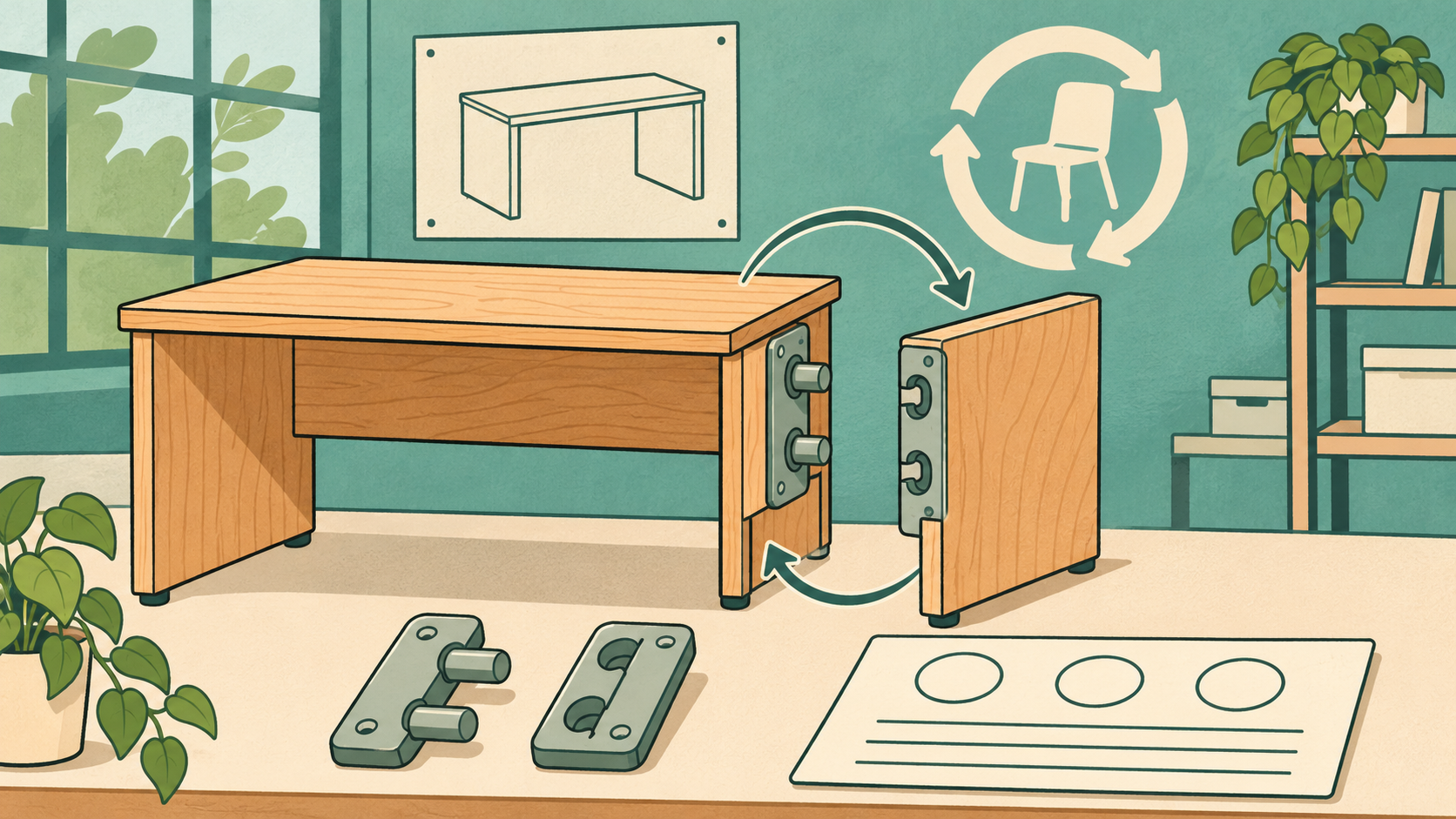
Consider a hypothetical removable desk panel. The team wants to investigate whether its connection can withstand repeated disassembly while keeping the panel suitable for further use. The designer defines the intended conditions and acceptance criteria. The research partner proposes a method that can distinguish connector wear from panel damage. The service team contributes observations from returned furniture.
Agree the evidence before running tests
Define the current connection as a baseline and record the proposed change separately. Give each test sample an identity so that an observation can be traced to the version actually examined. Decide together which records must survive a change in personnel or supplier.
- The research question and the uncertainty it addresses.
- The sample, connection version and condition at the start.
- The test method, observations and any deviation from the method.
- The person who assesses the result and the next design decision.
Write down unsuccessful outcomes as well. A panel that fails during dismantling can help explain where the proposed method needs work. It cannot support a claim that the complete desk is ready for repeated reuse.
Keep research findings useful after delivery
Once a design reaches customers, retain the applicable assembly instructions and their revision alongside the delivered configuration. Later repairs should add to that history. This gives the dealer a route back to the evidence when furniture returns for assessment. Our guide to circular furniture procurement explains how knowledge of existing assets informs a reuse decision.
Check the Dutch EKOO route and the next handover
RVO accepts project-idea feedback requests until 16 November 2026. Applications close on 3 December at 17:00 Netherlands time. Pilot and demonstration projects are excluded. Check the current EKOO conditions.
The programme concerns research and development for application in the Netherlands. Partners need to assess eligibility, collaboration and the proposed innovation against the full conditions. The research example above is our suggested way to formulate a question.
Furnify connects delivered furniture, documentation and service history. Map a furniture reuse handover with Furnify and identify which instructions and evidence the dealer will need to keep available after the research ends.