

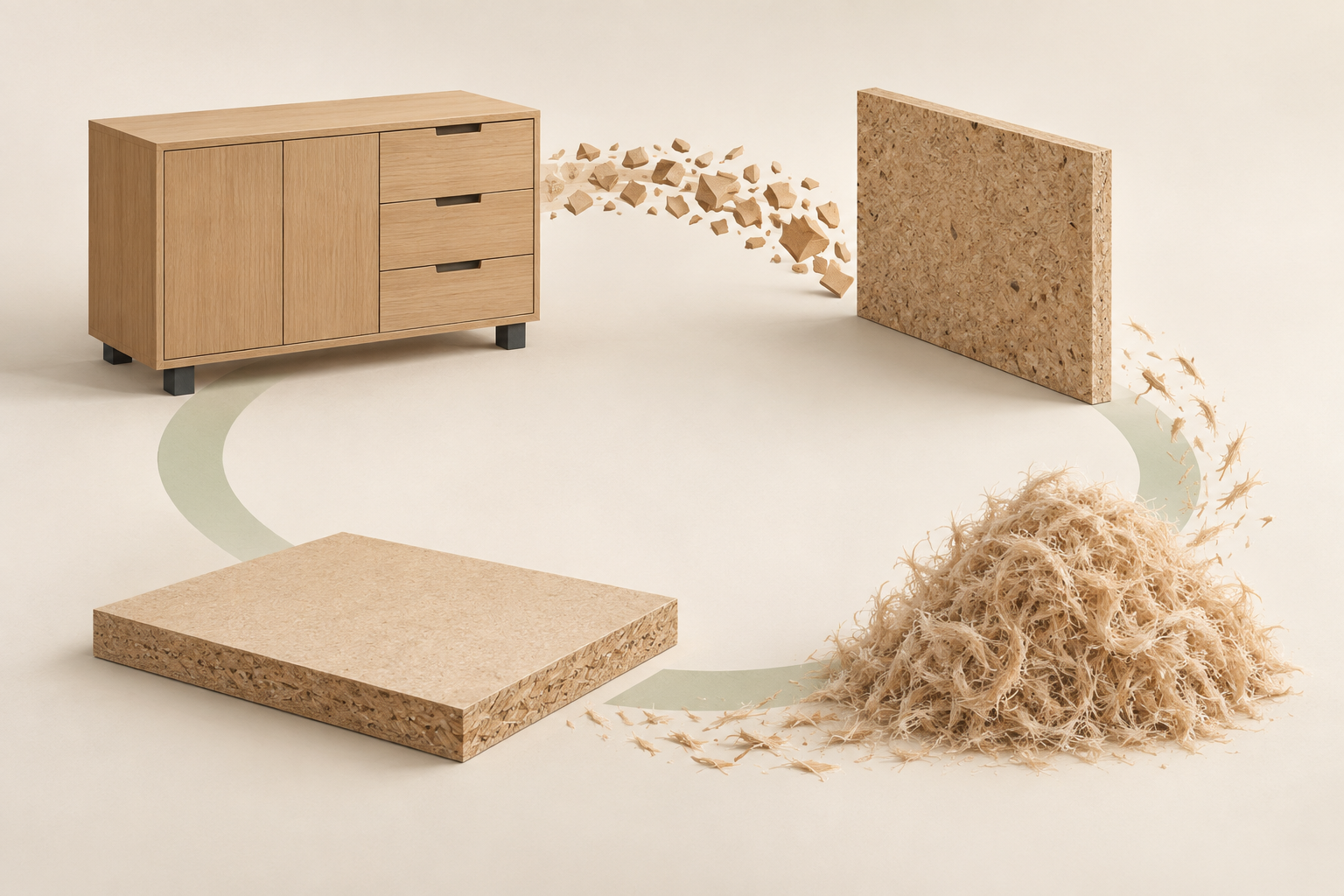
MDF furniture recycling becomes a practical question when a cabinet, desk or storage unit leaves an office. The object may still be useful, repairable or suitable for parts recovery. If its panels are damaged, a recycler needs to know what material arrives and how it was assembled. That information is often scattered across product specifications, purchase files and service records.
A CORDIS report published on 17 September 2026 describes EcoReFibre pilots for sorting post-consumer wood, recovering fibres from fibreboard and using fine wood particles in new panels. The EU project record identifies MDF as an important furniture material. These are demonstrated recycling routes, not a guarantee that every discarded furniture panel is accepted by a local processor.
What MDF furniture recycling needs to know
For manufacturers, dealers and facilities teams, the first task is to connect each delivered item to its material specification. A useful record should make the following questions answerable:
- Which board type and product variant were delivered?
- Which surfaces, coatings and other materials are attached to the board?
- How can panels, fittings and other components be separated without losing their identity?
- What repairs, replacements or alterations happened during use?
- Who will verify the material and the available processing route at removal?
A supplier declaration can establish a starting point, but it should be linked to the correct version of the actual asset. The installed item may have different finishes or replacement parts from the original order.
Choose the next use before the recycling route
At a move or refurbishment, assess the whole piece first. Reuse, repair or component recovery may preserve more of its existing value. When a panel is no longer fit for those options, the material record supports sorting and a discussion with an appropriate processor. EcoReFibre shows that recovered fibres can be used in new materials under tested conditions; the available route depends on material quality, contamination and local capacity.
This distinction matters for procurement and service. Product teams can specify fields before purchase, project teams can confirm what was installed, and facilities teams can keep locations and changes current. Recycling teams then receive evidence rather than an unidentified pile of panels.
Connect material records to the furniture asset
The earlier Furnify article on furniture traceability explains how product identity, evidence and installed assets fit together. For MDF furniture, add a material view: board type, component breakdown, available specifications and the source of every claim. Mark unknown fields explicitly; do not infer composition from appearance.
Furnify helps keep that information associated with the furniture item, its location and its service history. The platform does not certify recyclability or choose a processor. Review one MDF-based furniture range with Furnify to see which material and asset records are ready for a second-life decision and which still need evidence.