

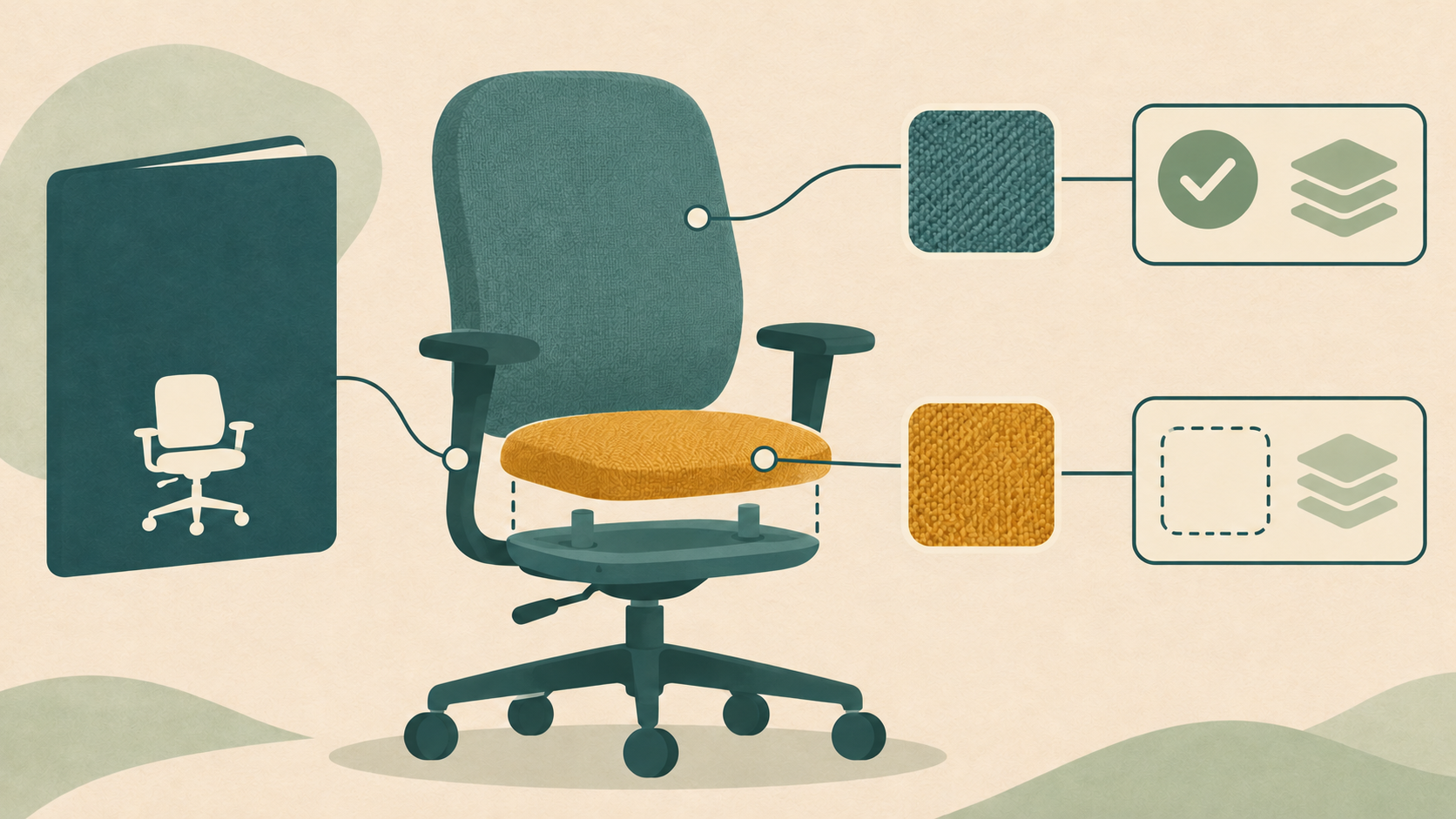
The draft furniture Digital Product Passport is open for feedback until 25 November 2026. For furniture manufacturers and importers, it puts an everyday data problem in focus. A declaration for one upholstery option can be attached to a whole chair range, even though it covers only one version. Before deciding how to publish passport information, test whether you can tell exactly which configuration a document supports.
What the furniture Digital Product Passport study examines
The draft assesses which product information could be useful, where it comes from, what evidence supports it and who might need access. It considers whether information belongs at model, batch or individual item level. The feedback date is a consultation deadline. The final fields, access rights and level of detail for furniture are still open. Preparatory study and feedback templates · Draft furniture DPP assessment, sections 8 and 9.
Test one model with two upholstery variants
Take a chair sold in fabric and vinyl. Ask product management to identify both saleable versions and procurement to retrieve the supplier declaration for each finish. If a recycled-content statement covers only the fabric component, attach it to that component and retain its scope. A percentage for upholstery cannot be used to describe the entire chair. Keep an unresolved gap visible when evidence for the second finish is missing.
- Record the model, configuration code and revision.
- Mark which component or batch the evidence covers.
- Keep the issuer, issue date and document version with the claim.
- Name the person responsible for checking gaps and substitutions.
Test the handover when a supplier changes
Have someone outside the product team trace a supplied chair back to the applicable declaration. Then simulate a supplier change and repeat the test. The product team should be able to identify which configurations are affected and preserve the earlier document for units already delivered. Use the result to decide which fields belong in your product system, where evidence lives and what the dealer needs after delivery. Further reading on furniture traceability.
Furnify connects delivered furniture with its location, documentation and service history. That gives a dealer a place to reference the configuration actually supplied when a customer raises a service request. Discuss one variant handover with Furnify and bring a record whose supporting evidence is hard to find.